

If you've ever spent a night camping on a lumpy air mattress that deflated halfway through and left you waking up with a sore back, you've probably wondered: are inflatable camping mats actually worth the hassle? As someone who's been in the camping mat supply business for over a decade, I've answered this question hundreds of times-both to weekend campers pitching tents in local state parks and to families planning backcountry expeditions. The short answer? It depends on what you're looking for, but for most people, modern inflatable camping mats are way better than the old, clunky models of the past. Let me break this down with real-world experience, not just sales jargon, and share a few of our most popular options along the way.
First, let's talk about the biggest advantage that makes inflatable mats a top pick for most campers: portability and packability. When I started in this industry 12 years ago, the standard "inflatable sleeping pad" was a bulky, heavy piece of vinyl that took up almost as much space in your car as a cooler. You'd have to haul it around, blow it up with your mouth (a chore at high altitude, when the air is thin and cold), and hope it didn't get punctured by a sharp rock or tent stake. Today's models are a completely different story. We design our mats to pack down to the size of a water bottle or a small tote, so they fit easily in backpacks, car trunks, or even the overhead compartment of a plane if you're flying to a remote camping spot.
Take our Double Inflatable Sleeping Pad, for example, which is one of our bestsellers for couples or families. It packs down to just 12 inches in diameter and weighs only 3.5 pounds-about as much as a single bag of dog food. Compare that to a traditional foam camping pad, which is often heavier and takes up more space, especially for two people. If you're car camping, portability might not be the top concern, but even then, who wants to clutter their car with extra gear that could be used for snacks or camping chairs? For backpackers, though, the weight and size difference is a game-changer. Every ounce counts when you're hiking 10 miles a day, and a lighter mat means you can bring more water, food, or other essentials without straining your back.

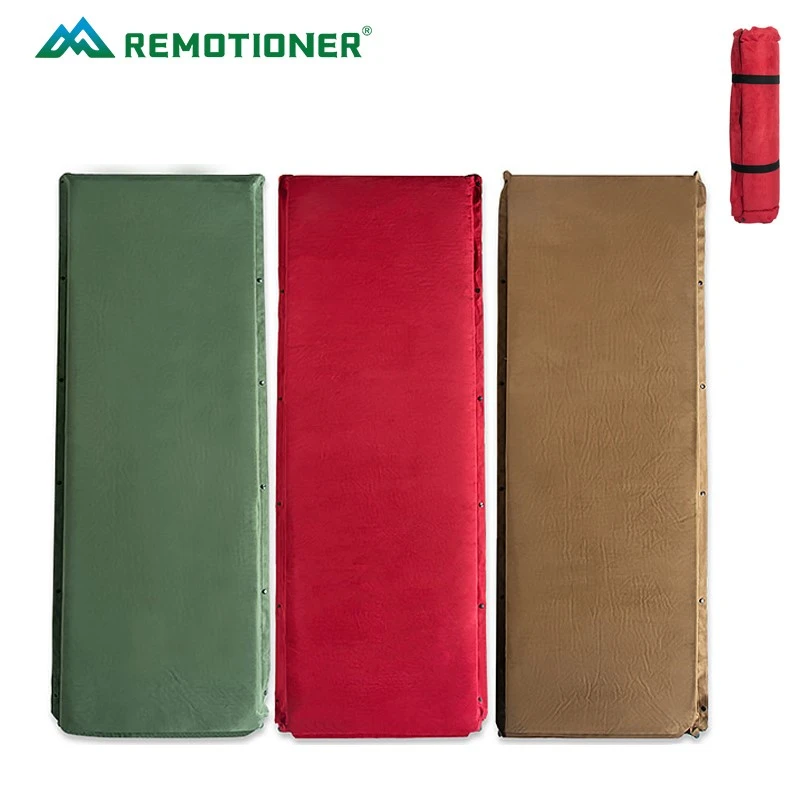
But portability is only part of the equation. The second big question is: are inflatable camping mats comfortable enough for a good night's sleep? I've tested dozens of mats, including foam, self-inflating, and air-filled ones, and I can tell you that comfort boils down to two things: thickness and support. Old inflatable mats were thin, so you could feel every rock and twig under the tent floor, leading to a night of tossing and turning. Modern models, though, use high-quality materials like polyurethane or thermoplastic polyurethane (TPU) that are durable and provide enough cushioning. Our Self Inflating King Mattress, for instance, is 4 inches thick-almost as thick as a twin bed at home. It has a foam core that expands when you open the valve, so you don't even have to blow it up manually (though you can adjust the firmness by adding or releasing a little air). I've slept on this mat at 7,000 feet in the Rockies, and I woke up with zero back pain-something that never happened when I used foam pads in my early camping trips.
That said, comfort isn't one-size-fits-all. Some campers prefer a firmer mat for back support, while others like a softer, pillowy surface for side sleeping. The great thing about inflatable mats is that you can customize the firmness to your liking, which you can't do with foam or even self-inflating mats that have a fixed foam core. For example, if you're a side sleeper who needs a little more give in your hips, you can release a tiny bit of air from the mat to make it softer. If you prefer a firmer surface for back sleeping, just add a little more air. This adjustability is a huge plus for people with specific sleeping needs, like those with mild back stiffness or joint pain.
Of course, no product is perfect, and inflatable camping mats do have some downsides that you should consider before buying. The most common concern is durability-will it get punctured? It's true that sharp objects like tent stakes, thorns, or even a stick under the tent can puncture an inflatable mat, but modern materials are way more puncture-resistant than they used to be. We test all our mats with sharp rocks and thorns during the design process, and we also include repair kits with every mat we sell, so you can fix a small puncture on the trail in minutes. The key is to take a few simple precautions: when setting up your tent, clear the ground of any sharp objects, and be careful when moving around the mat at night. Compare that to foam mats, which can get chewed up by rodents or damaged by rough use, and I'd argue inflatable mats are actually more durable for regular campers.
Another downside is that some people find inflating them to be a hassle-especially if you're using a manual pump. But this is a problem we solved with our range of pumps. Our Foot Pump Inflating Sleeping Mat, for example, is lightweight and easy to use: you just step on it to push air into the mat, no lung power required. It takes about two minutes to inflate a standard mat, which is way faster than blowing it up with your mouth, especially at high altitude or in cold weather (when your lips get chapped and it's hard to take deep breaths). For people who really hate pumping, our Self Inflating King Mattress is a no-brainer: it expands on its own in about 10 minutes, and you can top it off with a pump if you want a little more firmness.
Now, let's talk about use cases, because whether an inflatable camping mat is good for you depends on how you camp. If you're a casual car camper who only goes out a few times a year, an inflatable mat is a great choice because it's comfortable, easy to store, and fits in your car. If you're a serious backpacker who hikes long distances, a lightweight inflatable mat is way better than a heavy foam pad. Even for family camping trips, our Double Inflatable Sleeping Mat lets couples or siblings sleep next to each other without fighting over space, and it's easy to pack up when you're ready to leave.
That said, inflatable mats aren't the best choice for every scenario. If you're car camping in a very hot or very cold environment, you might want to pair your mat with an insulating layer. Wait, speaking of layers, did you know we also sell camping blankets and picnic rugs that work perfectly with inflatable mats? Our Thick Beach Blanket is not just for the beach-it's waterproof, sand-resistant, and soft enough to lay on top of your mat for extra warmth and comfort. For picnics at the campground, our Wanderer Picnic Rug is lightweight, durable, and has a non-slip backing that stays in place on grass or dirt. These products aren't directly sleeping mats, but they complement your inflatable mat to make your entire camping experience better.
I've seen a lot of myths about inflatable camping mats over the years, and one of the most persistent is that they're bad for the environment. In reality, modern inflatable mats are made with recyclable materials (we partner with local recycling centers to take back old mats from customers who want to upgrade) and last for years if you take care of them. A high-quality inflatable mat can last 5-10 years, which is longer than many cheap foam pads that fall apart after a couple of uses. When you factor in the cost per use, a $100 inflatable mat works out to about $10 a year if you use it 10 times, which is way cheaper than buying a new foam pad every season.
Another myth is that inflatable mats are only for adults, but we have options for kids too-smaller, lighter mats that are perfect for sleepovers or family camping trips. They're just as durable as our adult mats, and they pack down small so they don't take up space in your tent.
So, putting it all together: are inflatable camping mats good? For 90% of campers, the answer is a resounding yes. They're more comfortable than foam pads, lighter and more portable than traditional air mattresses, adjustable to your sleeping preferences, and durable enough to last for years. The small downsides (like the rare puncture or the need to inflate them) are easily solved with modern designs and accessories, like our range of pumps and repair kits.
If you're in the market for an inflatable camping mat, we'd love to help you find the right one for your needs. Whether you're a car camper looking for a king-sized mat for the whole family or a backpacker needing a lightweight model for multi-day hikes, we have options that fit every budget and style. We also offer bulk pricing for campgrounds, outdoor clubs, and anyone who wants to buy multiple mats for a group. If you're interested in learning more about our products or want to discuss your specific camping needs, feel free to get in touch. We're always happy to help.
References
- Outdoor Industry Association. (2023). Camping Gear Trends 2023: Sleep and Comfort. Retrieved from outdoorindustry.org
- Consumer Reports. (2022). Best Camping Mats for 2022. Retrieved from consumerreports.org
- National Park Service. (2021). Backcountry Camping Gear Guidelines. Retrieved from nps.gov
- European Outdoor Group. (2022). Sustainable Materials in Outdoor Equipment. Retrieved from europe.outdoor.org