

Hey there, soccer enthusiasts! As a soccer ball supplier, I get tons of questions from players, coaches, and even parents about using soccer balls in different conditions. One question that pops up a lot is, "Can you use a soccer ball in extreme cold?" Well, let's dive right into it.
First off, let's talk about what extreme cold does to a soccer ball. Most soccer balls are made of materials like PVC or PU. When it gets really cold, these materials become more rigid. PVC, for example, is a pretty common material in budget - friendly soccer balls. In cold weather, it can lose its flexibility. You know how a ball should bounce and roll smoothly? In the cold, a PVC ball might feel a bit like a rock. It won't have that nice, responsive bounce you're used to during warmer days.
PU, on the other hand, is a bit more high - end. It's often used in High Quality PU Seamless Football and other premium soccer balls. PU generally holds up better in cold weather than PVC, but it's not immune. In extreme cold, it can still become stiffer, and the ball's performance can be affected. The seams of the ball, which are crucial for its shape and flight path, can also be at risk. Cold temperatures can make the glue or stitching in the seams brittle, increasing the chances of the seams coming apart.
Another thing to consider is the air inside the ball. You know how you're supposed to keep your ball at the right air pressure? Well, in cold weather, the air contracts. This means that even if you inflated your ball to the correct pressure on a warm day, it'll be under - inflated in the cold. An under - inflated ball is not only harder to kick accurately, but it can also cause uneven wear on the ball.
Now, let's look at some of the balls in our catalog. Take the Teen Adult PVC PU Soccer Ball Football For Training. It's a great all - around ball for training, but in extreme cold, you might notice that the PVC parts get a bit too hard. However, if you're just doing some light practice and you don't mind a slightly different feel, it can still do the job.
The Green Soccer Ball Size 5 is a popular choice for many players. It's a size 5 ball, which is the standard size for adult and professional games. Made with high - quality materials, it's more likely to withstand cold weather better than some cheaper alternatives. But again, extreme cold is a tough test for any ball.
So, can you use a soccer ball in extreme cold? The short answer is yes, but you need to be aware of the challenges. If you're going to play in the cold, here are some tips. First, check the air pressure of your ball before you head out. You might need to inflate it a bit more than usual to account for the cold - induced contraction. Second, try to warm up the ball if you can. You can keep it in a warm place like your car or your house until just before you start playing.
Also, be gentle with the ball. In cold weather, it's more prone to damage, so avoid kicking it too hard against hard surfaces. If you notice any signs of damage, like a seam starting to come apart or the ball losing its shape, it might be time to retire the ball for the day.

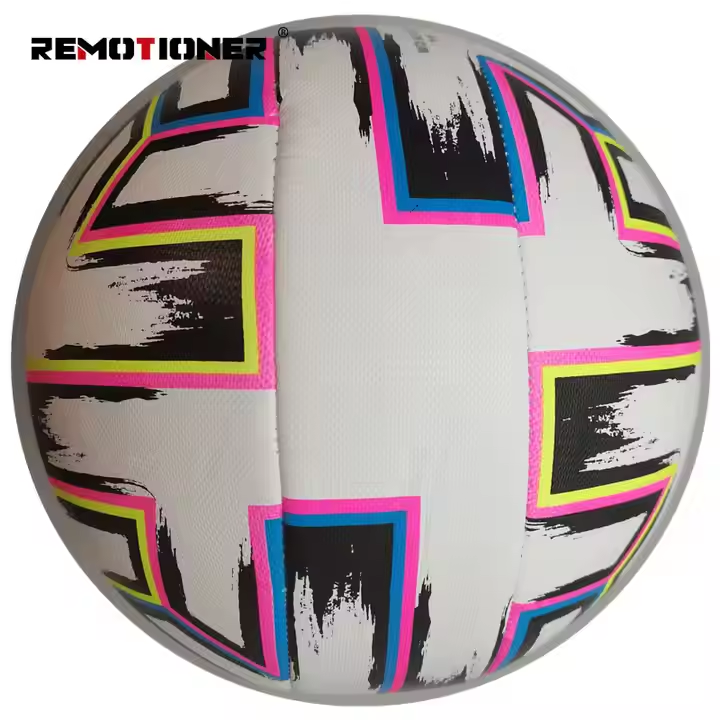
As a soccer ball supplier, I understand that players want a ball that performs well in all conditions. That's why we're constantly working on improving our products. We're researching new materials and manufacturing techniques to make our balls more resistant to extreme cold and other harsh conditions.
If you're in the market for a new soccer ball, whether you're playing in the cold or not, we've got a wide range of options for you. Our balls are made with quality in mind, and we stand behind every product we sell. Whether you're a beginner looking for an affordable training ball or a professional in need of a top - of - the - line match ball, we've got you covered.
If you have any questions about our soccer balls, or if you're interested in placing an order, don't hesitate to reach out. We're here to help you find the perfect ball for your needs. Whether you're playing in a friendly neighborhood game or a competitive tournament, we want to make sure you have the best possible experience on the field.
In conclusion, using a soccer ball in extreme cold is possible, but it comes with its challenges. By being aware of these challenges and taking the right precautions, you can still enjoy a great game of soccer even when the temperature drops. So, go ahead and give it a try, and let us know how it goes!
References
- "The Science of Soccer Balls" - Sports Science Journal
- "Materials and Performance of Soccer Balls in Different Conditions" - Athletic Equipment Research Institute