

Measuring a sleeping bag accurately is crucial, whether you're a consumer looking for the perfect fit or a supplier ensuring the quality and standard of your products. As a sleeping bag supplier, I understand the importance of providing precise measurements to our customers. In this blog, I'll share how to measure a sleeping bag effectively, covering different aspects such as length, width, and temperature rating.
Measuring the Length
The length of a sleeping bag is a fundamental measurement. It determines whether the bag can accommodate the user comfortably from head to toe. To measure the length of a sleeping bag, you'll need a measuring tape. Start by laying the sleeping bag flat on a clean, even surface. Make sure the bag is fully extended and not bunched up.
Begin the measurement from the top of the bag, usually where the headrest or hood is located. Stretch the measuring tape along the centerline of the bag all the way to the foot end. Ensure that the tape is straight and not curved or twisted. For a mummy - shaped sleeping bag, measure along the inner curve of the bag as this is the area where the user will rest.
A proper length measurement is essential for different user needs. For example, taller individuals will require longer sleeping bags. Our [2 Person Cotton Sleeping Bags](/outdoor - mat/sleeping - bag/2 - person - cotton - sleeping - bags.html) come in various lengths to accommodate couples of different heights. By providing accurate length measurements on our product pages, customers can make an informed decision about which bag will fit them best.
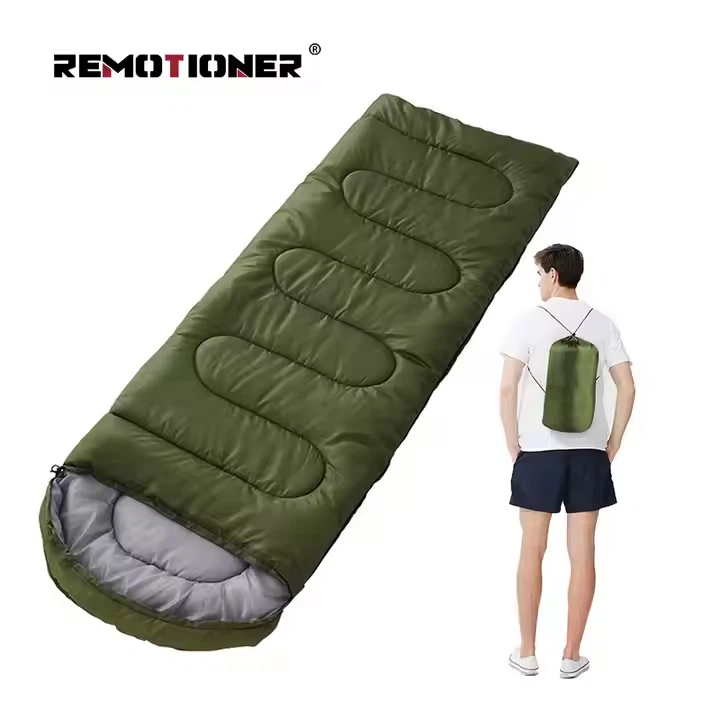

Measuring the Width
Width is another important dimension of a sleeping bag. It affects the user's comfort level, especially in terms of movement during sleep. To measure the width, place the sleeping bag flat and open it up fully.
For a rectangular or semi - rectangular sleeping bag, measure the width at the widest part of the bag, typically around the shoulder area. Stretch the measuring tape across the bag from one side to the other, making sure it is parallel to the ground.
In the case of a mummy - shaped sleeping bag, measure the width at the chest area and the hip area separately. The chest width determines how much room you have to move your arms, while the hip width affects your leg movement. Our [Lightweight Down Sleeping Bag](/outdoor - mat/sleeping - bag/lightweight - down - sleeping - bag.html) is designed with different width specifications to offer a balance between warmth and comfort. A wider bag may be more suitable for those who like to move around a lot during sleep, while a narrower one can provide better insulation by reducing the amount of air space inside the bag.
Measuring the Temperature Rating
The temperature rating of a sleeping bag indicates the lowest temperature at which the bag can keep a user warm. This is a critical measurement, especially for outdoor enthusiasts who will be using the bag in different weather conditions.
There are different methods to measure temperature ratings. One common approach is the EN (European Norm) rating system. This system has three ratings: comfort rating for women, comfort rating for men, and extreme rating.
To determine these ratings, the sleeping bag is tested in a controlled laboratory environment. A thermal mannequin is placed inside the bag, and the temperature is gradually lowered until a certain heat loss level is reached. The comfort rating is the temperature at which a person can sleep comfortably, while the extreme rating is the lowest temperature at which a person can survive for a short period.
As a supplier, we ensure that our [Cotton Camping Sleeping Bag](/outdoor - mat/sleeping - bag/cotton - camping - sleeping - bag.html) undergoes rigorous temperature testing. We provide clear temperature rating information on our product descriptions so that customers can choose the right bag according to the expected weather conditions of their camping trips.
Other Measurements
Apart from length, width, and temperature rating, there are other measurements that can be important. For example, the fill power of a down - filled sleeping bag is a measure of the quality and loft of the down. A higher fill power means better insulation and lighter weight.
To measure fill power, a sample of down is placed in a cylinder, and the volume it occupies is measured after being compressed and then allowed to expand. The fill power is expressed in cubic inches per ounce. This measurement helps customers understand the insulation performance of our down - filled sleeping bags.
The thickness of the shell and lining materials also matters. A thicker shell can provide better protection against wind and moisture, while a soft and breathable lining enhances comfort. We measure the thickness of these materials using specialized calipers to ensure consistent quality across our product range.
Importance of Accurate Measurements
Accurate measurements are not only important for customer satisfaction but also for the reputation of our business. When customers receive a sleeping bag that matches the advertised measurements, they are more likely to trust our brand and make repeat purchases.
In addition, accurate measurements help us manage our inventory more effectively. By knowing the exact dimensions and specifications of our products, we can optimize our storage space and ensure that we have the right products in stock to meet customer demand.
Contact for Procurement
If you're interested in purchasing our high - quality sleeping bags, we welcome you to contact us for procurement discussions. We offer a wide range of sleeping bags with precise measurements and excellent quality. Whether you're a retailer looking to stock our products or an individual planning an outdoor adventure, we can provide you with the right solutions.
References
- "Sleeping Bag Buyer's Guide" by REI Co - op
- European Norm EN 13537 for sleeping bag temperature ratings.