

If you've ever worked with soccer balls-whether you're a coach, player, or, full disclosure, someone who runs a soccer ball supply business-you've probably stumbled on the same weird problem: that perfectly good ball you stashed in the corner of your garage is flat a month later, or the bright blue one you saved for match day is all scuffed and faded from sitting in the sun. I've spent years testing all kinds of storage hacks, both for personal use and for the thousands of balls we ship out every month, and let me tell you, there's way more to storing a soccer ball than just tossing it in a bin. It's not rocket science, but it does tie to basic science-stuff that affects air pressure, material durability, and even how the ball plays when you finally take it out.
First, let's start with the basics everyone skips: what soccer balls are actually made of these days. Back in the day, they were leather, which absorbed water and got heavy fast, but now most are synthetic polyurethane or PVC panels, glued or stitched together. That material reacts to temperature, humidity, and even how much air's inside it-all things that get thrown off if you store the ball wrong. Let's break down each key factor one by one, because that's where most people mess up.
Air pressure is probably the biggest one. I can't tell you how many times a customer has emailed us saying, "My ball went flat overnight, what gives?" And 9 times out of 10, it's stored somewhere extreme. Here's the science bit: gases expand when warm and contract when cold. So if you leave a fully pumped ball in your hot car trunk on a 90-degree F day, the air inside heats up, expands, and could even stretch the seams. Then, if you bring that same ball inside and it cools down to 60 degrees F, the air contracts, and suddenly you've got a ball that's 2-3 PSI low-way under regulation. For reference, official match balls are supposed to be inflated between 8.5 and 15.6 PSI, depending on the league, but for recreational use, most players prefer around 10 PSI. Wait, and for the little kids' balls, like the 5 Inch Soccer Ball for under-8 teams, the PSI is a lot lower too-like 6-8 PSI, because tiny kids can't kick a overinflated ball that hurt. If you check our product pages, every ball has the exact PSI range listed, so you don't have to guess.
Next, temperature extremes are the enemy number one. I learned this the hard way a couple years back when I stored a bunch of our Official Match Ball Size 5 balls in an unheated storage unit during the winter. It got down to 20 degrees F one night, and when I pumped them up again, 12 of the 50 had cracked panel edges. The cold makes the synthetic material brittle, like how a plastic bottle breaks if it's left out in the frost. Then on the flip side, high heat-like a garage that hits 120 degrees F in summer-breaks down the glue holding the panels together, and also makes the rubber bladder inside porous, so air leaks out way faster than normal. So rule number one: don't store your balls somewhere that gets hotter than 85 degrees or colder than 50 degrees F. A cool, dry closet is perfect, not your back porch or car.
Humidity is another big one people overlook. If you store balls in a damp basement or a gym closet that's always sweaty, the moisture can get trapped between the panels and the bladder, leading to mold or mildew. And that's not just gross-it can eat away at the material over time, making the ball soft and lopsided. I've seen balls that were only a month old go bad because they were stashed in a damp corner of a rec room. Even if you're using the ball regularly, wiping it down with a dry cloth after each use and letting it air out before storing it will help a ton.
Now, what about how you actually position the ball when you store it? A lot of people just pile their balls on top of each other in a bin, but that's a no-no. Stacking heavy balls on top of each other can dent the panels, especially if they're fully pumped. For short-term storage (like a week or two between practices), leaving them on a shelf, spaced out, is fine. For longer-term storage (like if you've got balls for next season that you're not using right now), there's a trick: deflate them slightly, roll them up loosely in a cotton sheet or a mesh bag, and tuck them somewhere out of the way. Why? Deflating takes pressure off the panels, and a breathable material keeps moisture from getting trapped. Avoid plastic bags if you can-they hold in moisture like a raincoat, which is how mold starts.
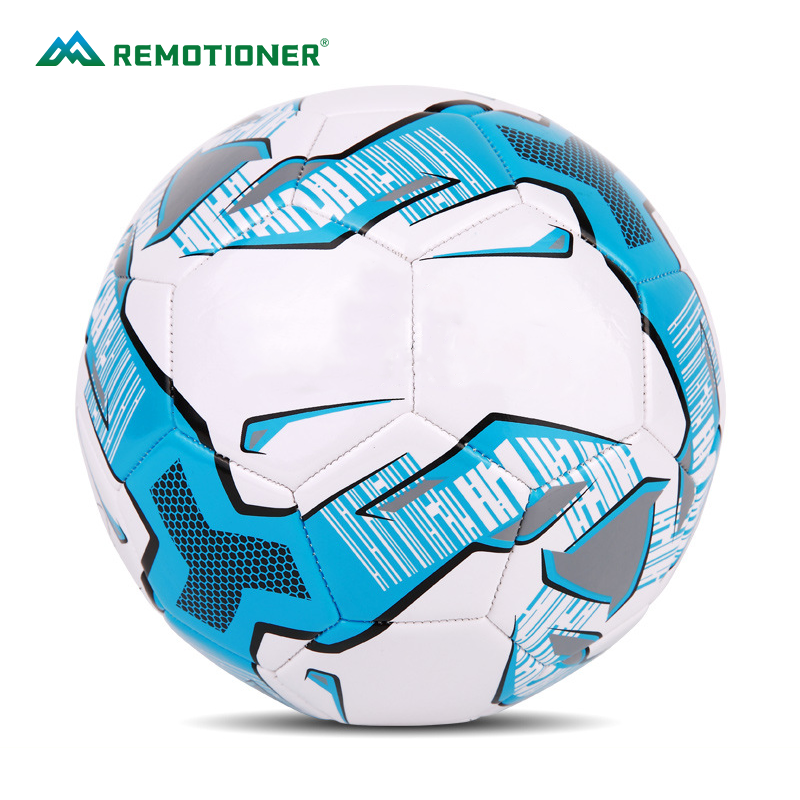
Wait, let's talk about specific types of balls too, because storage can change depending on what you're using them for. Our Mens Size 5 Football (that's the same as a size 5 soccer ball, for anyone who confuses football with American football) is the standard for high school and adult leagues, so those get a lot of heavy use. If you're storing a match ball that's going to get kicked hard next week, you don't want to deflate it all the way, but you should drop the PSI by 1 or 2 to take stress off the seams. For our Blue Soccer Ball Size 5, which is super popular for rec teams because it stands out on the field, the bright pigment can fade if it's stored in direct sunlight for months. Sunlight has UV rays that break down the dye, so store colored balls in a dark spot, not on a window sill. And the little ones- the 5 Inch Soccer Ball for under-6 or under-8 teams-are smaller, so they're easier to lose, but also easier to store in a cubby or a bin with their name marked on it so no one mixes them up.
I should also mention some common myths I hear all the time. First, "I need to fully inflate a ball to store it so it doesn't go flat." No, that's not right. If you're storing it long-term, overinflating will just put more pressure on the bladder and panels, leading to leaks or cracks. Second, "Leaving the valve open keeps air from leaking." That's totally false-valves are designed to hold air when closed, and leaving them open will just let whatever air's in the ball escape, and let dirt and dust get inside, which can damage the valve over time. Third, "All balls need the same PSI." Nope-like I said earlier, size 3 and 4 balls (for younger kids) have lower PSI, so check the product page for your specific ball, like the Regulation Soccer Ball Size 5 page has all the official PSI specs for competition play.

Now, as someone who runs this supply business, I've tested all these hacks with our inventory over the past five years, and I can say they work. We used to have a 15% return rate for "flat or damaged storage balls" and now it's down to less than 2%, just from tweaking how we store our stock. For customers, we also send a little storage tip sheet with every bulk order, because we know how frustrating it is to get a brand-new ball that's ruined a month later.
If you're a coach restocking your team's balls, or a parent buying a few for your kid's practices, or even a recreational player who has a couple balls for weekend games, following these simple steps will make your sets last twice as long. No more flat balls mid-game, no more faded colors, no more cracked seams before the season even starts.
Wait, one last quick tip: if you live in a place with super extreme seasons-like Arizona where it hits 110 in summer or Minnesota where it drops below zero in winter-invest in a small digital thermometer/hygrometer for your storage space. That way you can make sure it stays within the 50-85 F temperature range and under 50% humidity. It's like $10 on Amazon, and it'll save you a ton of hassle.
If you're a team manager, league organizer, or even a store owner looking to stock up on quality soccer balls that hold up no matter how you store them, we've got all the options you need: from the official match balls for competition play, to the bright blue ones that are easy to spot on crowded fields, to the small size ones for young players. Just shoot us a message to talk about bulk pricing or custom orders-we're here to help you keep your team's gear in top shape all year round.
References:
- International Federation of Association Football (FIFA). "Soccer Ball Regulations and Specifications." 2023.
- American College of Sports Medicine. "Environmental Effects on Sports Equipment Durability." Medicine & Science in Sports & Exercise, vol. 52, no. 7, 2020, pp. 1452-1460.
- Synthetic Sports Surfaces Association. "Care and Maintenance of Synthetic Soccer Balls." 2022.
- National Recreation and Park Association. "Youth Sports Equipment Storage Best Practices." 2021.