

Hey there, fellow soccer enthusiasts! I'm a supplier of top - notch soccer balls, and I've seen firsthand how the weather can have a wild impact on these spherical wonders. In this blog, I'm gonna break down how different weather conditions can change the way a soccer ball behaves on the pitch.
Let's start with the sunny days. When it's bright and sunny, the temperature can rise quite a bit. The heat has a direct effect on the air inside the soccer ball. You see, air expands when it gets warm. According to the ideal gas law, when the temperature increases, the pressure inside the ball also goes up if the volume remains constant. So, on a hot sunny day, your soccer ball becomes a bit more inflated than it was in normal conditions.
This increased pressure makes the ball bounce higher and roll faster. When players kick it, it takes off like a rocket! For attackers, it can be a great advantage as they can send long - range passes with ease. However, goalkeepers might have a tougher time. The ball's unpredictable high bounces can make it difficult to catch. If you're looking for a ball that can handle these sunny conditions well, check out our PVC Official Match Football. It's designed to maintain its shape and performance even under high - temperature situations.
Now, let's talk about rainy weather. Rain can turn the pitch into a slippery mess, and it has a huge impact on the soccer ball. First of all, the ball gets wet. A wet ball is heavier than a dry one because it absorbs water. This extra weight slows down the ball's movement. Passes that would normally travel a long distance on a dry pitch might fall short when it's raining.
The wet surface also reduces the ball's friction with the ground. So, when players try to dribble, the ball can slide out from under their feet more easily. Defenders might find it harder to tackle because the ball is so slippery. Goalkeepers, on the other hand, have to deal with a soggy ball that's harder to grip. Our Club Football Training Soccer Ball has a special coating that helps repel water to some extent, making it a better choice for rainy games.
Next up is windy weather. Wind can be a real game - changer. A strong headwind can slow down the ball significantly when it's in the air. This means that long - range shots or passes might not reach their intended targets. For example, if a player tries to send a cross from one side of the field to the other, the wind can push the ball off course.
On the flip side, a tailwind can give the ball an extra boost. Shots that would normally be blocked by the goalkeeper might sail right over their heads because of the wind. Midfielders need to be extra careful when making long passes as the wind can easily change the ball's trajectory. Our Pu Soccer ball has a balanced design that helps it resist the effects of wind to a certain degree, ensuring more accurate passes and shots.

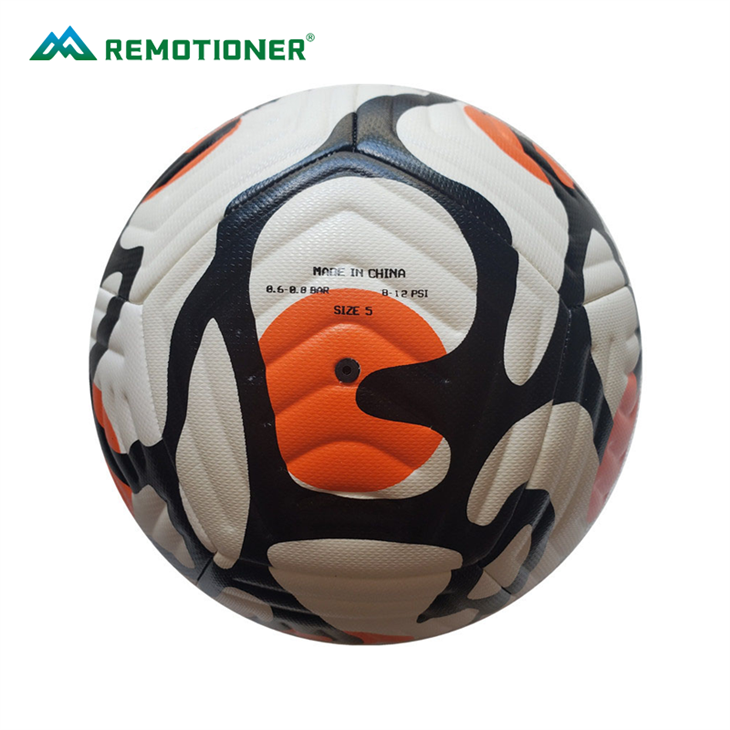
Cold weather is another factor. When it's cold, the air inside the ball contracts. Just like how air expands in the heat, it shrinks when it's cold. This leads to a decrease in the ball's internal pressure. A deflated - feeling ball doesn't bounce as well and is more difficult to control.
Players might find it harder to get the ball to lift off the ground for a high pass or a shot. The ball's movement becomes more sluggish, and it takes more effort to make it move at the desired speed. If you're playing in cold weather, make sure to check the ball's pressure regularly and inflate it if needed. Our soccer balls are made with materials that can withstand cold temperatures better, so they won't lose their shape and performance as quickly.
Snowy conditions are similar to rainy ones in some ways. The snow on the pitch makes it soft and uneven. The ball sinks into the snow, which slows it down. Passing and dribbling become much more challenging as the ball doesn't roll smoothly. It can also be difficult to judge the ball's movement because the snow can cover its path.
The ball can pick up snow as it moves, adding more weight. This extra weight affects its flight and bounce. Goalkeepers have to be extra vigilant as the ball's movement can be erratic in the snow. We've designed our soccer balls to perform decently even in snowy conditions, but you still need to adapt your playing style.
As a soccer ball supplier, I know how important it is to choose the right ball for different weather conditions. The weather can make or break a game, and having a ball that can handle it all is crucial. Whether you're a professional team or just a group of friends playing on the weekends, having the right equipment can enhance your playing experience.
If you're interested in our high - quality soccer balls that are designed to perform well in all kinds of weather, feel free to reach out. We're always ready to have a chat about your specific needs and how our products can meet them. Don't hesitate to start a conversation about purchasing our soccer balls for your next game or training session.
References
- Physics textbooks on gas laws and fluid dynamics
- Personal experience as a soccer ball supplier and observations of soccer games in various weather conditions