

Hey there! As a solar panel supplier, I often get asked, "How much energy can a solar panel produce?" Well, let's dive right into this question and break it down in a way that's easy to understand.
First off, it's important to know that the energy production of a solar panel isn't a one - size - fits - all answer. There are several factors that come into play. The most obvious one is the size of the solar panel. Generally speaking, larger panels have more surface area to capture sunlight, which means they can produce more energy. But it's not just about the physical size; the efficiency of the solar cells inside the panel also matters a great deal.
The efficiency of a solar panel refers to how well it can convert sunlight into electricity. High - efficiency panels can turn a larger percentage of the sunlight they receive into usable energy. For example, a panel with an efficiency of 20% can convert 20% of the sunlight it gets into electricity, while a 15% efficient panel will convert less. This difference might seem small, but over time, it can add up to a significant amount of extra energy.
Another key factor is the amount of sunlight the panel receives. Solar panels work best when they're exposed to direct sunlight. If a panel is in the shade for a large part of the day, its energy production will be severely limited. The location of the panel also matters. Panels in sunny regions like the deserts of Arizona or the Australian Outback will produce more energy than those in cloudier areas like the Pacific Northwest in the United States or parts of the United Kingdom.
The angle and orientation of the solar panel are also crucial. In the Northern Hemisphere, solar panels usually produce the most energy when they face south at an angle that's close to the latitude of the location. In the Southern Hemisphere, they should face north. Adjusting the angle of the panel according to the season can also help maximize energy production. For instance, in the winter, when the sun is lower in the sky, tilting the panel at a steeper angle can capture more sunlight.
Now, let's talk about some common solar panel sizes and their approximate energy production. A standard residential solar panel might have a power output rating of around 250 - 400 watts. But what does that mean in terms of actual energy production? A watt is a measure of power, and energy is measured in watt - hours (Wh) or kilowatt - hours (kWh). If a 300 - watt solar panel is exposed to full sunlight for one hour, it will produce 300 watt - hours of energy. In a day, assuming an average of 5 hours of full - sun exposure, that same panel will produce about 1.5 kilowatt - hours (since 300 watts x 5 hours = 1500 watt - hours or 1.5 kWh).
But keep in mind that this is an ideal scenario. In real - world conditions, there are losses due to factors like temperature, dirt on the panel, and the efficiency of the inverter (which converts the DC electricity produced by the panel into AC electricity for use in your home). So, the actual energy production might be a bit less than the theoretical maximum.
If you're looking for more portable options, we have some great products. Check out our 60w 80w 100w Portable Foldable Solar Panels. These panels are perfect for camping, RVing, or any situation where you need a reliable source of solar power on the go. They're easy to carry and set up, and they can still produce a decent amount of energy, even in less - than - ideal conditions.
For those who need a compact solution, our Efficient Power in Mini Size: Solar Panel Charger is a great choice. Despite its small size, it packs a punch and can charge your small devices like smartphones, tablets, and even some portable power banks.
And if you have multiple devices to charge, our Versatile Mini Solar Panel Charger for Multiple Devices is the way to go. It can handle charging several devices at once, making it a very practical option for both indoor and outdoor use.
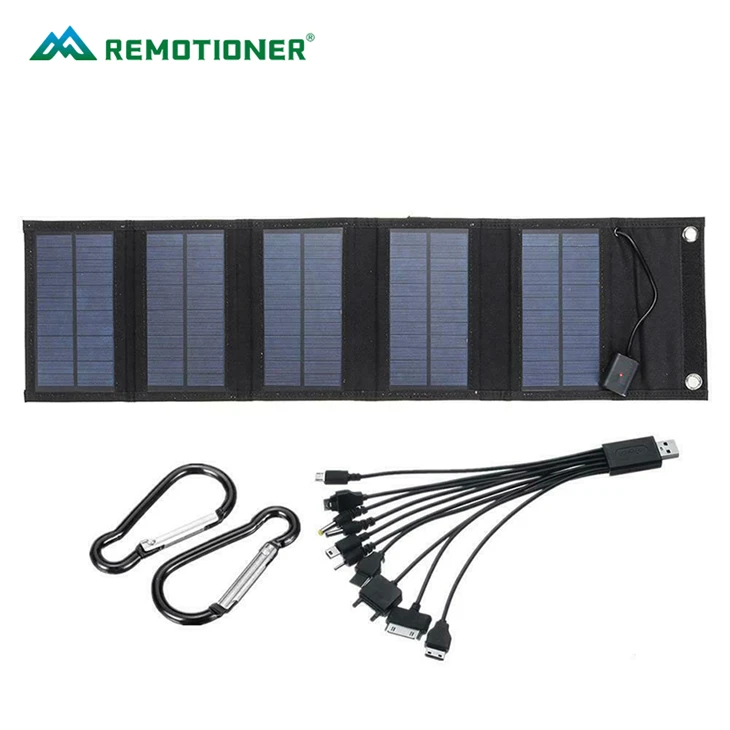

To give you a better idea of how much energy these smaller panels can produce, a 60 - watt portable solar panel, under good sunlight conditions (say, 4 hours of direct sun), can produce around 240 watt - hours of energy per day. That's enough to charge a smartphone several times or power a small LED light for many hours.
So, as you can see, the energy production of a solar panel depends on a variety of factors. But no matter what your needs are, whether it's powering your home, your RV, or just charging your small devices, there's a solar panel out there that can meet them.
If you're interested in learning more about our solar panels or are thinking about making a purchase, we'd love to talk to you. We can help you figure out the best solar panel solution for your specific situation, taking into account your energy needs, location, and budget. Just reach out to us, and we'll be happy to assist you in your journey towards clean, renewable energy.
References:
- "Solar Power for Dummies" by Rik DeGunther
- National Renewable Energy Laboratory (NREL) research papers on solar panel efficiency and performance
- Various industry reports on solar energy production and market trends