

Hey there, fellow soccer enthusiasts! As a soccer ball supplier, I've seen firsthand how the surface texture of a soccer ball can make or break a game. In this blog, I'm gonna dive deep into the impact of a soccer ball's surface texture on play, and how it can affect your performance on the field.
Let's start with the basics. The surface texture of a soccer ball refers to the way it feels and looks on the outside. It can range from smooth to rough, and each texture has its own unique characteristics that can influence how the ball behaves during a game.
Control and Touch
One of the most important aspects of soccer is control. Being able to control the ball with your feet, chest, and head is crucial for passing, dribbling, and shooting. The surface texture of a soccer ball plays a significant role in how well you can control it.
A ball with a smooth surface, like the Pu Soccer, offers less friction between the ball and your foot. This means that the ball can glide off your foot more easily, allowing for faster passes and more precise shooting. Smooth balls are also great for long-range shots, as they can travel through the air with less resistance.
On the other hand, a ball with a rough surface, such as the PVC Official Match Football, provides more grip. When you touch the ball, the rough texture helps it stick to your foot, giving you better control. This is especially useful for close dribbling and quick changes of direction. You can really feel the ball under your foot, and it responds more predictably to your movements.
Bounce and Trajectory
The surface texture of a soccer ball also affects its bounce and trajectory. A smooth ball tends to have a more consistent bounce. When it hits the ground or a surface, it rebounds in a relatively straight line. This predictability makes it easier for players to anticipate where the ball will go after a bounce, which is important for headers, chest traps, and ground passes.
In contrast, a rough - textured ball may have a more erratic bounce. The uneven surface can cause the ball to bounce at unexpected angles, which can be both a blessing and a curse. For defenders, it can make it harder to intercept the ball, as it's more difficult to predict its path. For attackers, it can create opportunities for creative plays, as they can use the unpredictable bounce to their advantage, catching the opposition off - guard.
When it comes to trajectory, a smooth ball is more likely to follow a linear path through the air. This is ideal for long passes and crosses, as you can aim more accurately. A rough ball, however, may deviate from its intended path due to air resistance acting on the uneven surface. This can be used to your advantage when taking free - kicks or long - range shots, as you can add some swerve or dip to the ball.
Weather Conditions
Weather plays a huge role in how a soccer ball's surface texture affects play. In wet conditions, a smooth ball can become slippery. Water on the surface reduces the friction even further, making it harder to control. Players may find it difficult to get a good grip on the ball, resulting in more fumbled passes and missed shots.
A rough - textured ball, on the other hand, performs better in the rain. The rough surface helps to channel water away from the ball, maintaining better grip. This is why many professional leagues use balls with a certain amount of texture for games played in wet weather.
In dry conditions, both smooth and rough balls have their advantages. A smooth ball allows for fast - paced play, while a rough ball gives you more control during individual maneuvers.
Player Skill Level
The impact of a soccer ball's surface texture also depends on the player's skill level. Beginners may find it easier to start with a smooth ball. The predictability of its movement helps them learn the basic skills of passing, shooting, and dribbling. As they gain more experience and confidence, they can gradually switch to a rough - textured ball to improve their control and take their game to the next level.
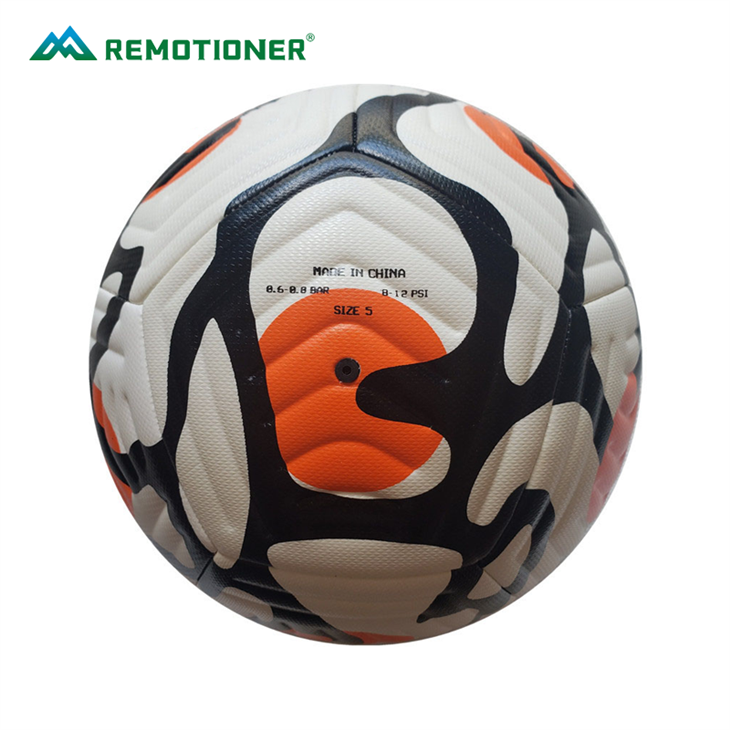

For professional players, the choice of ball texture often comes down to personal preference and the specific requirements of the game. Some players prefer the speed and precision of a smooth ball, while others rely on the extra grip and creativity offered by a rough one.
Our Product Range
As a soccer ball supplier, we understand the importance of surface texture in soccer. That's why we offer a wide range of soccer balls to suit different playing styles and conditions. Our Pu Soccer is perfect for players who value speed and precision. Made from high - quality PU material, it has a smooth surface that allows for fast passes and accurate shooting.
If you're looking for a ball with more grip and control, our PVC Official Match Football is a great choice. Its rough surface provides excellent traction, making it ideal for close - range dribbling and quick changes of direction.
For training purposes, our Club Football Training Soccer Ball is a versatile option. It offers a good balance between smoothness and grip, allowing players to practice a variety of skills.
Conclusion
In conclusion, the surface texture of a soccer ball has a profound impact on play. It affects control, bounce, trajectory, performance in different weather conditions, and is even influenced by the player's skill level. Whether you're a beginner or a professional, choosing the right ball texture can significantly enhance your game.
If you're interested in purchasing high - quality soccer balls for your team, club, or personal use, we'd love to hear from you. Contact us for more information about our products and to start a purchase negotiation. We're committed to providing the best soccer balls that meet your specific needs.
References
- "The Science of Soccer Balls" - Sports Science Journal
- "How Ball Texture Affects Soccer Performance" - International Journal of Sports Technology