

1. Core Differences: Inner Bladder & Outer Coating
Unlike traditional inflatable basketballs that prioritize high bounce and air tightness, silent basketballs are engineered with noise reduction as the core priority. Every material upgrade targets shock absorption and sound dampening, creating obvious differences from standard balls.
Inner Bladder: Solid Foam Core vs Traditional Inflatable Bladder
Most premium silent basketballs adopt a high-density solid foam integrated core, completely abandoning the hollow inflatable structure of regular balls. This solid foam structure absorbs 80%+ impact vibration during bouncing, eliminating the loud hollow collision sound of traditional basketballs. Meanwhile, it delivers stable and soft bounce without sudden bouncing deviation.
A few entry-level silent balls use improved butyl rubber inflatable bladders instead of ordinary latex bladders. Butyl material features low air permeability and soft toughness, reducing bouncing noise by about 20% compared with latex bladders while maintaining basic air retention. However, its mute effect and structural stability are far inferior to solid foam cores.
In short: solid foam core = full mute & stable bounce; butyl inflatable core = slight noise reduction & cost-effective.
To optimize mute performance, the outer coating deliberately sacrifices partial wear resistance. In contrast, standard outdoor basketballs adopt thickened rough rubber coatings to resist friction on concrete and asphalt. This fundamental trade-off is the root
2. Clear Indoor & Outdoor Usage Boundaries (Must-Know Rules)
Due to the inherent material characteristics of mute core and soft coating, silent basketballs have absolute usage boundaries. Mixing indoor and outdoor use is the top cause of product damage and mute function failure.
Indoor Use: Exclusive Optimal Scenario
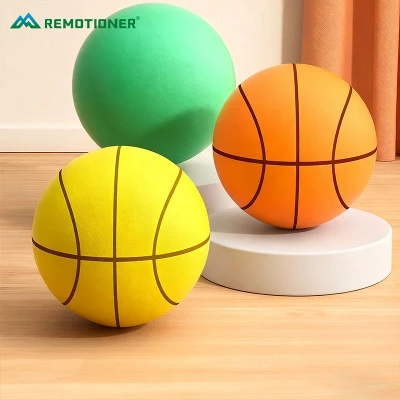
Silent basketballs are originally designed for indoor training. Suitable for wooden floors, tile floors, carpets, and indoor courts. The flat and smooth indoor surface perfectly protects the soft mute coating, maintains lasting noise reduction effect, and delivers stable bounce and grip.
It is the best choice for apartment dribbling, family parent-child sports, and daily indoor skill training, effectively avoiding disturbing neighbors while meeting daily exercise needs.
Outdoor Use: Strict Restrictions & Taboos
Regular outdoor use is NOT recommended. Rough outdoor surfaces such as concrete, asphalt, gravel courts will quickly wear off the soft mute coating. Long-term outdoor use will lead to coating peeling, ball surface hardening, complete loss of mute effect, and uneven bounce.
Only short-time use on smooth outdoor plastic courts is allowed. Never use silent basketballs on muddy, sandy, or rough outdoor grounds. For daily outdoor street ball and competitive training, traditional wear-resistant rubber or leather basketballs are more suitable.
3. How to Choose Based on Material & Scenario
Family/apartment indoor practice: Choose solid foam core + soft mute coating silent basketball, with the best noise reduction and stable hand feel.
Occasional smooth outdoor use: Select upgraded silent balls withenhanced wear-resistant nano coating to extend service life.
Long-term outdoor competitive training: Abandon silent balls and choose standard wear-resistant outdoor basketballs to avoid frequent replacement.
Final Conclusion
The core value of silent basketballs lies inmaterial-based noise reduction, not universal all-scenario performance. The solid/improved inner bladder ensures mute bouncing, while the soft outer coating brings comfortable hand feel - yet these core mute materials also determine its indoor-oriented attributes. Understanding the material differences and strictly abiding by indoor and outdoor usage boundaries can maximize product performance, extend service life, and avoid unnecessary wear and functional failure.


