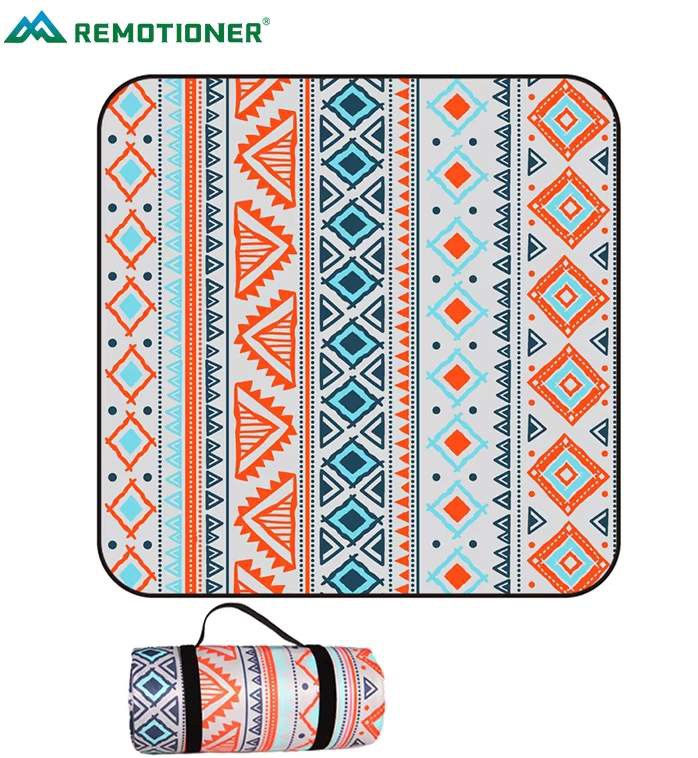
Beyond the fundamental choice of material, the size and functional features of a picnic mat are critical in determining how well it will serve you in the field. A mat that is too small creates cramped discomfort, while one that is too large becomes a burden to carry. Likewise, smart functional details can transform a simple mat into a versatile outdoor tool.
Choosing the Right Size: A Guide
The goal is to select a size that balances comfortable seating space with portability. A good rule of thumb is to allow approximately 60-70 cm of width per person, though more space is always welcome for lounging.
Small (e.g., 1.5m x 2m): This compact size is the champion of portability. It can be easily folded or rolled into a small package that fits into a backpack or even a large handbag. It's perfectly suited for an individual or a couple enjoying an intimate picnic in an urban park or on a short hike. It provides just enough space for two people to sit comfortably with a small spread of food between them.
Medium (e.g., 2m x 2m): This is often considered the "goldilocks" size for a small family or a group of 3-4 friends. It offers a generous square footage for people to sit, with room for a picnic basket, a cooler, and other essentials without feeling overcrowded. It remains manageable to carry, often coming with a shoulder strap on its storage bag, making it ideal for day trips to the beach or park.
Large / Extra-Large (e.g., 2m x 3m and above): When hosting a larger gathering, a spacious mat is non-negotiable. These mats can comfortably accommodate 5 or more people, allowing space for children to play or for adults to stretch out and relax. The primary consideration with large mats is their bulk and weight when folded. They are best suited for occasions where you are travelling by car and have minimal walking from the vehicle to the picnic spot.
Modern picnic mats incorporate design elements that significantly elevate their utility and convenience.
Waterproof and Moisture-Proof Barrier: This is arguably the most crucial function. A high-quality mat will feature a waterproof backing made from materials like laminated PVC, TPU, or a thin aluminum foil layer (often called an "aluminum blanket" or "insulated" layer). This barrier effectively blocks ground moisture from seeping through, keeping users dry and comfortable even on morning dew-covered grass or slightly damp sand. Always check the product description for this feature.
Ease of Cleaning: Outdoor activities can be messy. Mats with smooth, non-absorbent surfaces like EVA, PVC, or coated Oxford fabric are the easiest to maintain. Spills, sand, and crumbs can be quickly brushed off or wiped away with a damp cloth. Some cotton or polyester-blend mats are even machine washable, which is a significant advantage for dealing with deep-set stains or spills, though the drying process is longer.
Portability and Storage: A mat's design for travel is vital. Most mats are designed to be folded or rolled compactly. Look for mats that come with a dedicated storage bag, preferably one with handles or a shoulder strap for easy carrying. Features like built-in straps or魔术贴 (móshùtiē, hook-and-loop fasteners or Velcro) help keep the mat tightly rolled, preventing it from unravelling in your backpack or car trunk. The ease of this process directly impacts how often you'll want to use the mat.
By thoughtfully considering both the dimensions for your typical group size and the functional features that match your intended environments, you can select a picnic mat that provides a reliable, comfortable, and clean foundation for countless outdoor adventures.